Sometimes the past does not return as a clear memory. It returns as a sudden wave of fear, a tight chest after a small disagreement, or the familiar feeling that love must be earned. You may know, intellectually, that you are safe now, while another part of you is still preparing for what used to happen next.
Childhood abuse and dysfunctional family systems can shape beliefs about love, trust, self-worth, boundaries, and belonging. Those early lessons can influence adult relationships, but they do not define your future. With awareness, support, and sustained healing, new lessons can take root.
This is not about blaming yourself for patterns you learned in order to survive. It is about understanding where those patterns came from—and discovering that they can change.
A gentler starting point: You do not have to heal everything at once. One honest observation, one safer boundary, or one supportive conversation can be a meaningful beginning.
When the Past Speaks through the Present
The effects of childhood trauma are not always obvious or constant. They may surface through triggers, anxiety, emotional dysregulation, numbness, or relationship patterns that seem confusing even to you. A raised voice, a delayed reply, criticism, or emotional distance can activate an old alarm before you have time to decide whether the present situation is truly dangerous.
You might notice yourself becoming intensely watchful, shutting down during conflict, apologising quickly, or struggling to name what you feel. These responses are not proof that something is wrong with your character. They may be protective strategies that once helped you navigate an unpredictable environment.
With compassionate attention, you can begin to pause between the trigger and the response. That pause creates room to ask: What is happening now? What belongs to the past? What do I need in this moment?
Awareness can make patterns visible:
- Triggers may reveal which experiences still feel unresolved.
- Emotional swings or shutdown may signal that your system is overwhelmed, not that you are failing.
- Relationship habits may show where old rules about love and safety are still operating.
Healing does not mean never being triggered again. It can mean recognising the pattern sooner, responding with more choice, and returning to yourself with less shame.
When the Person who Hurts You is also the Person you Need
For a child, dependence is not optional. The same parent who causes fear may also be the person who provides food, shelter, comfort, approval, or protection from the outside world. A child cannot simply walk away and make sense of the contradiction. Their mind may hold two painful truths at once: I am being hurt and I still need this person.
That conflict can create confusing bonds. Moments of tenderness may feel enormous because they arrive after fear or rejection. An apology, a gift, or a brief return to warmth can keep hope alive. None of this means the child wanted the harm or caused it. It means the child was adapting to an impossible situation with the resources available.
Later, this history can make inconsistency feel familiar. Intense closeness followed by withdrawal may be mistaken for passion. Relief after conflict may feel like intimacy. The goal is not to judge these responses, but to understand them well enough to choose something safer.
Remember: Needing comfort from a caregiver never made a child responsible for the caregiver’s behaviour. The responsibility for abuse belongs with the person who chose to cause harm.

When “Tough Love” disguises Harm
Abuse is sometimes softened with phrases such as “I’m doing this for your own good” or “You need to toughen up.” When cruelty is presented as care, a child may learn to distrust their own pain. They may decide that affection comes with humiliation, fear, control, or the need to perform perfectly.
Healthy love can include limits, honesty, and accountability. It does not require a child to accept degradation, intimidation, or the repeated dismissal of their feelings. A boundary can be firm without being frightening. Correction can happen without destroying dignity.
As adults, people who grew up with these mixed messages may minimise mistreatment or feel guilty for wanting gentleness. They may call basic respect “too much to ask.” Healing includes learning to recognise the difference between care that helps you grow and control that asks you to become smaller.
Why Familiar Love can Feel like the Only Love
When a parent is emotionally unavailable, low in empathy, or generous with affection only when a child performs, the child may begin working for connection. They become exceptionally helpful, agreeable, perceptive, or forgiving. They learn to monitor other people’s moods while setting aside their own needs.
That strategy can follow them into adulthood. They may over-function in relationships, tolerate one-sided effort, or feel drawn to people who need rescuing but struggle to offer mutual care. They may take responsibility for another person’s anger, distance, or healing, hoping that enough patience will finally produce the love they once longed to receive from a parent.
This is not a prediction or a permanent identity. Familiarity can influence attraction, but awareness can widen the range of what feels possible. A calm relationship may feel unfamiliar at first without being empty. Consistency may feel less exciting than unpredictability, yet still be far more nourishing.
You are not responsible for fixing an abusive person. Lasting change requires that person’s sustained accountability and action, and it may never happen. Your safety, dignity, and decision-making do not need to wait for them to become different.
Healing writes a Different Blueprint
Healing often happens in small, repeated experiences of safety. You notice that a boundary can be spoken without punishment. You let a trustworthy person support you without immediately repaying the debt. You leave a conversation when it becomes threatening. You allow your feelings to exist without arguing them away.
Over time, these choices can reshape what you expect from connection. Instead of asking, How can I become easier to love? you may begin asking, Is this relationship respectful, reciprocal, and safe enough for me to remain in?
Support can make this work less solitary. If these patterns feel familiar, consider speaking with a qualified, trauma-informed therapist or a trusted support network that respects your choices and safety. You do not have to disclose more than you are ready to share, and you deserve support that does not pressure you to reconcile, stay, or move faster than your own process allows.
A new relational blueprint may include:
- Recognising your needs before they become emergencies.
- Choosing relationships where care is consistent rather than conditional.
- Practising boundaries without treating other people’s disappointment as proof you did something wrong.
- Repairing harm through accountability, not promises alone.
When you heal, you are not required to become untouched by the past. You are creating more choices around it. Those choices can shape your relationships, your children’s understanding of love, and the possibilities available to future generations.
The Legacy you Choose Next
The patterns formed in an unsafe home may be powerful, but they are not destiny. Trauma can influence the way you understand love, respond to conflict, and protect yourself; it does not get the final word about who you are or what you can build.
Breaking the cycle is rarely one dramatic decision. It is often the steady practice of telling the truth about what happened, meeting yourself with compassion, seeking trustworthy support, and choosing what is safer today. Each small interruption of an old pattern becomes part of a healthier legacy.
You could begin with one step: write down a boundary you wish you could say, contact someone safe, or notice one moment when you treated yourself with more care than you were taught to expect. Let that step be small enough to take and meaningful enough to matter.
A compassionate invitation: You do not have to prove that your pain was serious enough to deserve help. Support, safety, and a life shaped by mutual respect are worthy goals—at every stage of healing.
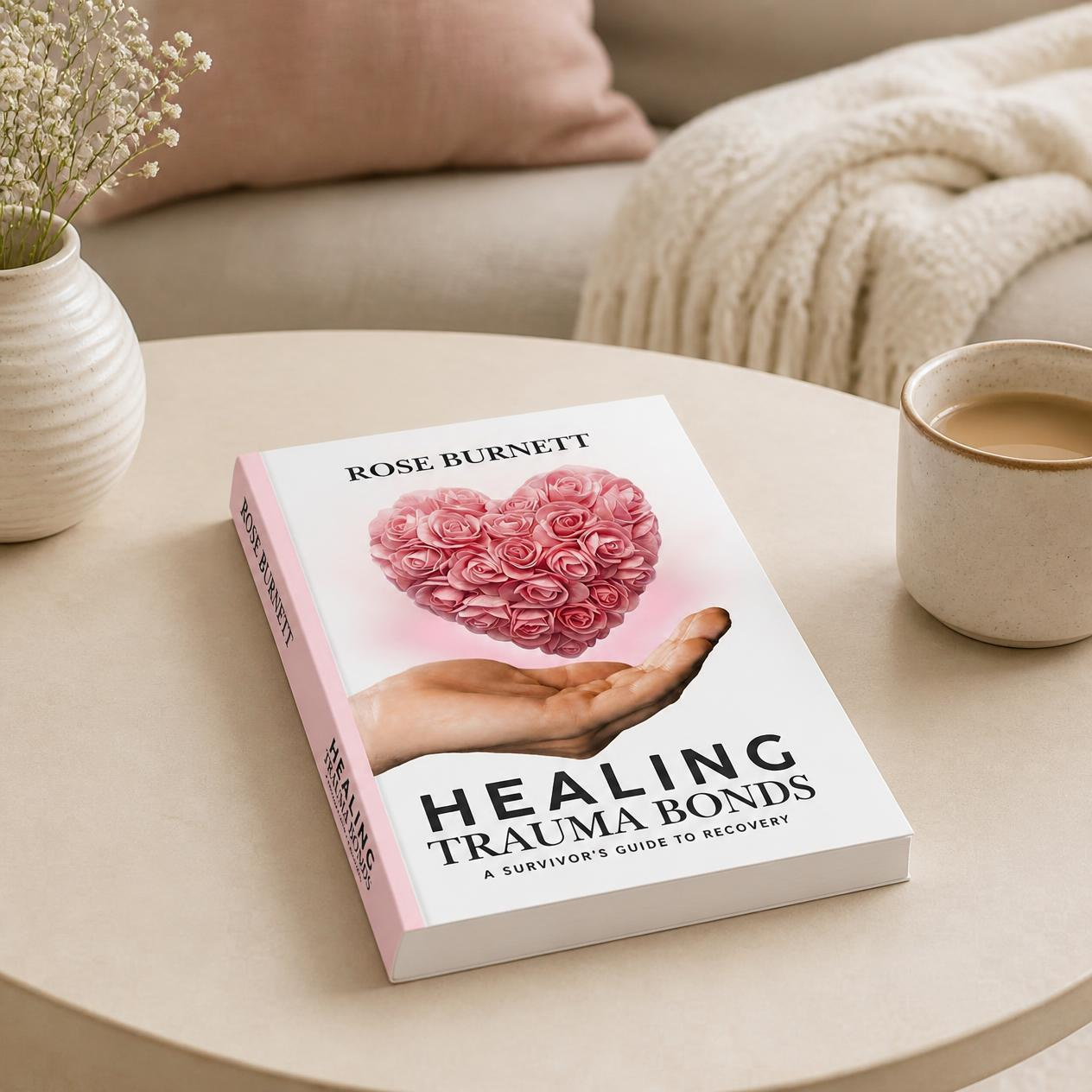
Healing Trauma Bonds: A Survivors Guide to Recovery
Based on a true story, this powerful book explores growing up in a dysfunctional family system and the lasting impact of childhood trauma. It reveals how early pain can shape our identity, self-worth, and the patterns that keep us trapped in trauma bonds. Honest and deeply personal, it speaks to anyone seeking understanding, healing, and freedom.
Available on Amazon in All Countries and Currencies. Choose your local Amazon platform for the best pricing on shipping and postage. Search using ASIN Number: B0HNR4H6XK

ABOUT THE AUTHOR
Rose Burnett is a Certified Transformational Coach, NLP practitioner, Advanced Reiki Practitioner, Psychic Medium and Author with more than 14 years’ experience in mindset coaching. Through her work in inner-child healing, family systems, trauma recovery, mind-body-soul balance, lifestyle coaching and psychic development, she helps people move towards greater awareness, self-discovery and inner growth. Her mission is to support others as they heal, reconnect with themselves and create more balanced, authentic lives.