Trauma does not always come from one clearly defined event. Sometimes it takes shape through repeated relational patterns: a home filled with tension, feelings that were dismissed, conflict that never reached repair, silence around painful subjects, or needs that went unmet again and again. These experiences can influence how a person learns to understand safety, love, responsibility, and their own worth.
Looking back at family dynamics can be tender and complicated. The goal is not to assign blame, diagnose anyone, or reduce a person’s life to their childhood. It is to notice how an emotional environment may have shaped the ways you protect yourself, connect with others, and respond when something feels uncertain. Understanding a pattern can support healing without excusing harmful behaviour or requiring reconciliation with people who are unsafe.
This article introduces family systems theory, a way of looking at families as interconnected relationships rather than isolated individuals. We will explore boundaries, family roles, interaction patterns, power, and multigenerational influences—and then consider how awareness can create more compassionate choices in the present.
Key idea: You can understand where a pattern came from without accepting it as inevitable, minimizing its impact, or taking responsibility for someone else’s choices.
Family Systems: When One Person’s Experience Is Connected to the Whole
Family systems theory views a family as an interconnected emotional unit. Each person has their own thoughts, feelings, and choices, yet those experiences are also shaped by the wider system: the expectations in the home, the ways people handle stress, the alliances they form, and the rules—spoken or unspoken—that govern closeness and conflict.
From this perspective, anxiety, withdrawal, acting out, or substance use may sometimes express strain within the wider system rather than being isolated personal failings. That context can help explain why a behaviour developed or why it became reinforced. It does not erase individual responsibility. Understanding the conditions around a behaviour is different from excusing harm or denying the need for accountability and change.
For example, one person may become highly reactive when another family member goes quiet. The silence may then deepen, someone else may step in to mediate, and the household may settle only when everyone returns to familiar positions. No single person creates the entire pattern alone, but each response can help keep it going. Seeing the sequence can reveal places where a different response might eventually become possible.
Boundaries Help Define Safety, Autonomy, and Connection
Boundaries are the emotional, physical, and practical limits that help people know where one person ends and another begins. Healthy boundaries are clear enough to protect individuality and flexible enough to allow closeness, care, and appropriate responsibility. They can change with age, context, trust, and consent.
In a family with clear and flexible boundaries, people can have different opinions without losing belonging. A parent may listen to a child’s feelings without asking the child to manage the parent’s emotions. Family members can share information while still respecting privacy. A person can say no, ask for space, or seek support without being punished for having a separate perspective.
Rigid boundaries can create emotional distance. Family members may avoid meaningful conversations, keep one another at arm’s length, or treat requests for comfort as weakness. A child in this environment may learn to rely only on themselves and may later find vulnerability, collaboration, or asking for help uncomfortable—even when support is available.
Weak or enmeshed boundaries can make closeness feel like obligation. A family member may expect immediate access to another person’s time, feelings, decisions, or private information. A child may be treated as a confidant, mediator, or emotional caretaker. Over time, the child may struggle to identify what they genuinely want because maintaining harmony has taken priority over developing a separate sense of self.
Boundary patterns are not always obvious, and no family maintains one style in every situation. A household may be warm and connected in some areas while becoming intrusive or distant around conflict, money, health, identity, or personal choices. Noticing where boundaries become unclear or inflexible can be a useful starting point for building emotional safety and mutual respect.
A compassionate distinction: A boundary is a limit you set around your own participation, availability or wellbeing. It is not a demand that another person feel, think or behave exactly as you do.

Family Roles: Strategies That Can Outlast the Stress
When a family is under ongoing stress, roles may emerge as attempts to create stability. One person may become dependable, another may absorb criticism, another may disappear into the background, and someone else may use humour to lighten the atmosphere. These roles can help a family get through difficult periods, especially when children have limited power to change the conditions around them.
Common descriptions include:
- The scapegoat may receive disproportionate blame or become the person onto whom the family’s distress is placed. This can lead to deep self-doubt, anger, vigilance, or a strong sensitivity to unfairness.
- The hero may become highly responsible, successful, helpful, or mature beyond their years. Achievement can bring approval and a sense of control, while mistakes, rest, or dependence may feel unsafe.
- The lost child may stay quiet, self-contained, and easy to overlook. Solitude can provide protection, but the person may later struggle to ask for attention, name their needs, or believe they are entitled to take up space.
- The mascot may use charm, humour, or lightness to ease tension. This can be a genuine strength, while also making it harder for others to recognise the person’s sadness, fear, or need for support.
These labels describe patterns, not permanent identities. A person can move among roles, resist them, or experience different roles with different family members. The same qualities that once helped someone cope may become limiting later. For instance, responsibility can become overfunctioning, independence can become isolation, and humour can become a way of avoiding emotional honesty.
Roles may continue into adulthood even after the original family environment has changed. They can influence self-esteem, work habits, friendships, intimacy, and expectations about what relationships require. Someone who was rewarded for never needing help may feel uneasy receiving care. Someone who was blamed may expect rejection even in supportive settings. These expectations can be understood and revised; they are not proof that a person is destined to repeat the past.
Interaction Patterns That Keep a System Familiar
Family systems often repeat familiar ways of responding to stress. Those patterns can feel automatic because they once helped people manage uncertainty, even when they now create harm or distance.
- Triangulation occurs when tension between two people is redirected through a third person. A child may be asked to carry messages between adults, take sides, or provide comfort that belongs in an adult relationship.
- Indirect communication replaces clear requests with hints, silence, criticism, or messages delivered through someone else. People may spend energy guessing what is meant instead of speaking openly and respectfully.
- Emotional suppression teaches family members to hide fear, sadness, anger, or disappointment to preserve an appearance of calm. Feelings do not disappear; they may emerge later as numbness, resentment, physical tension, or sudden reactions.
- Escalating reactivity happens when one person’s alarm activates another person’s defensiveness, which then increases the first person’s alarm. The conversation becomes about winning, withdrawing, or regaining control rather than understanding the underlying need.
Many systems also move toward homeostasis—the tendency to return to a familiar balance. In a family accustomed to silence, one person’s honesty may feel disruptive. In a family organised around rescuing, another person’s independence may be treated as rejection. Change can therefore feel threatening even when the old pattern is painful, because the familiar is predictable and the new is not yet trusted.
Recognising these patterns does not mean every interaction must be analysed or that one person is solely responsible for changing the family. It means you can begin to notice the moment a familiar sequence starts and consider what would protect your wellbeing, reduce harm, or make room for a more direct choice.
Power, Safety, and Patterns Across Generations
Family dynamics are shaped not only by emotions but also by power. Age, money, disability, caregiving responsibilities, gender expectations, culture, status, and access to resources can affect whose needs are heard and whose reality is accepted. A family may describe itself as close while still treating some members as if they have less voice, privacy, or freedom than others.
Inconsistent boundaries can make safety difficult to predict. Rules may apply differently depending on who is upset or who holds authority. Role confusion can place adult responsibilities on children or make a child responsible for protecting a parent from consequences. Inequitable treatment may be explained away as preference, while rigid coalitions—such as two family members consistently joining against another—can leave someone isolated and unable to participate on equal terms.
Power imbalances matter because connection is not truly mutual when one person must stay quiet to avoid retaliation, provide care to earn belonging, or surrender their choices to preserve peace. A trauma-informed view keeps safety at the centre. Understanding a system should never be used to pressure someone into contact, forgiveness, disclosure, or reconciliation with a person who remains harmful or unsafe.
Patterns can also travel across generations. Substance misuse, scapegoating, emotional absence, rigid gender roles, secrecy, or conflict avoidance may appear in several branches of a family. Sometimes people repeat what they learned; sometimes they overcorrect and create different difficulties. Family history can provide context, but it does not determine anyone’s future. Each person still has a capacity—often supported by safe relationships and qualified care—to question inherited beliefs and practise new responses.
What Awareness Makes Possible
Awareness is not the same as endlessly revisiting the past. It is the process of putting language to what has been confusing, normalised, or carried alone. Naming a pattern can soften shame because it separates “something happened around me” from “something is wrong with me.” It can also clarify the difference between responsibility and blame.
With time and support, awareness may help you:
- Notice inherited beliefs about love, conflict, success, privacy, or what you must do to deserve care.
- Strengthen boundaries by deciding what you will participate in, what information you will share, and when you need distance.
- Communicate more safely through direct requests, appropriate timing, and attention to whether the other person is willing to engage respectfully.
- Create new choices by pausing before an automatic reaction and choosing a response that reflects your values and present circumstances.
- Build supportive connections with people who respect consent, accountability, difference, and repair.
Change does not require a dramatic confrontation. It may begin with noticing that you are about to over-explain, asking whether a request is truly yours to carry, taking a pause before responding, or allowing yourself to leave a conversation that has become unsafe. Small choices can challenge an old role without demanding that the entire family change at once.
Therapy or other support from a qualified professional can help you explore these patterns with care, especially when trauma, ongoing harm, or intense emotional reactions are involved. You do not have to understand everything alone. Safety takes priority over family harmony, and distance can be a healthy choice when contact is destabilising or dangerous.
A Gentle Place to Begin
Family systems offer one way to understand how relational environments can shape coping, expectations, and a sense of self. They can help explain why certain responses feel automatic and why change may bring discomfort. At the same time, context is not destiny, and explanation is not exemption. Harm still matters, accountability still matters, and your safety matters.
You might begin with one question: What family pattern am I starting to notice, and what compassionate choice can I make for myself now?
The choice could be as small as naming a feeling privately, declining a request, reaching out to a trustworthy person, taking a restorative pause, or making an appointment with a qualified professional. Healing is not measured by how perfectly you understand your family. It is also found in the moments when you offer yourself more honesty, protection, and care than you were once taught to expect.
DISCLAIMER
This article is for general education and reflection. It is not a diagnosis, a clinical assessment, or a replacement for professional support. If you are dealing with ongoing danger, abuse, severe distress, or thoughts of harming yourself or someone else, seek immediate help from local emergency services or a qualified support professional.
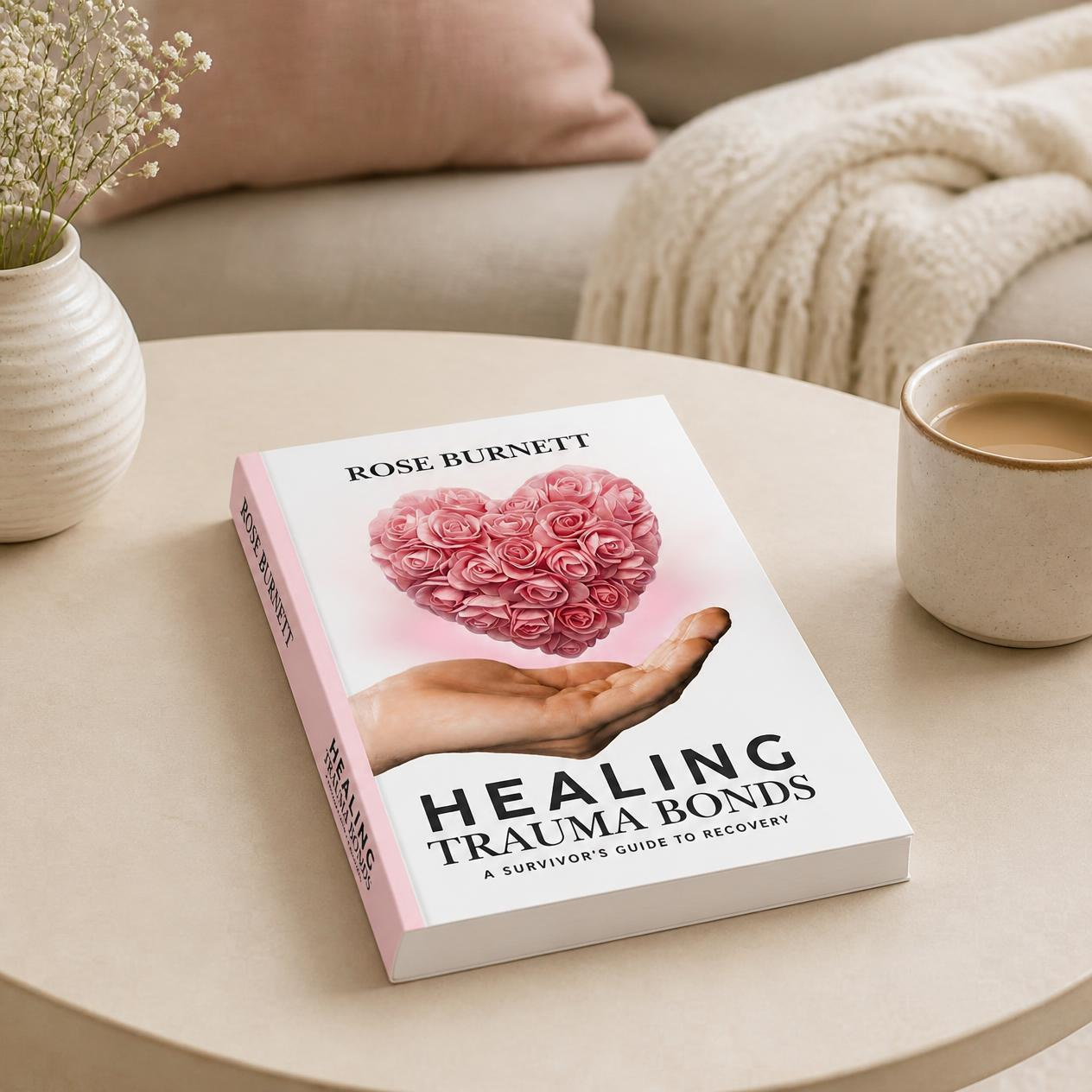
Healing Trauma Bonds: A Survivors Guide to Recovery
Based on a true story, this powerful book explores growing up in a dysfunctional family system and the lasting impact of childhood trauma. It reveals how early pain can shape our identity, self-worth, and the patterns that keep us trapped in trauma bonds. Honest and deeply personal, it speaks to anyone seeking understanding, healing, and freedom.
Available on Amazon in All Countries and Currencies. Choose your local Amazon platform for the best pricing on shipping and postage. Search using ASIN Number: B0HNR4H6XK

ABOUT THE AUTHOR
Rose Burnett is a Certified Transformational Coach, NLP practitioner, Advanced Reiki Practitioner, Psychic Medium and Author with more than 14 years’ experience in mindset coaching. Through her work in inner-child healing, family systems, trauma recovery, mind-body-soul balance, lifestyle coaching and psychic development, she helps people move towards greater awareness, self-discovery and inner growth. Her mission is to support others as they heal, reconnect with themselves and create more balanced, authentic lives.