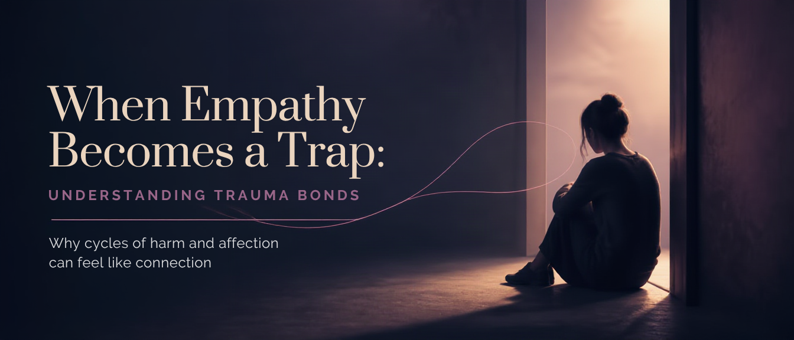
What if the quality that helps you understand people most deeply also makes it harder to recognize when you are being harmed? For highly empathic people, caring can become tangled with explaining, excusing, or trying to rescue someone who repeatedly causes pain.
This does not mean every empath experiences trauma bonding, or that empathy makes someone destined to remain in an abusive relationship. It means that deep emotional attunement can sometimes be used against a person—especially when affection and harm arrive in an unpredictable cycle.
Keep in mind: Understanding another person’s pain may explain their behaviour, but it never makes you responsible for enduring that behaviour.
Empathy Is Not Responsibility
Empathy is the ability to sense, understand, or imagine what another person may be feeling. It can bring patience, compassion, and emotional insight. But empathy is not the same as responsibility, and understanding a person’s wounds does not require you to accept the wounds they inflict on you.
In a painful relationship, a highly empathic person may notice the other person’s fear, shame, loneliness, or history before fully acknowledging their own exhaustion. Their attention turns outward: What happened to them? Why are they acting this way? What would help them change?
That focus can quietly become self-abandonment. The relationship begins to revolve around the other person’s pain while the empath’s needs are treated as secondary, inconvenient, or endlessly negotiable.
Some common signs of this shift include:
- Explaining instead of evaluating — spending more energy understanding harmful behaviour than noticing its impact on you.
- Hoping instead of observing — staying focused on who the person could become rather than what they consistently do now.
- Rescuing instead of relating — feeling that your patience, loyalty, or care might finally make the relationship safe.
Compassion can remain part of your character without becoming a reason to surrender your boundaries. A person can be hurting and still be accountable for how they treat you.
The Push-Pull Pattern That Makes Leaving So Hard
Trauma bonding often develops through a repeating cycle of harm followed by relief, affection, apologies, attention, or promises of change. The kindness does not arrive consistently; it appears after distress, sometimes just when you are close to giving up.
This pattern is called intermittent reinforcement. In simple terms, the reward is unpredictable. You do not know when warmth will return, so you may become increasingly focused on earning it, preserving it, or waiting for the next good moment. The uncertainty itself can keep hope alive.
The cycle may look something like this:
- Harm — criticism, intimidation, betrayal, control, neglect, or another form of abuse creates fear and instability.
- Repair — the person apologizes, becomes tender, makes promises, or briefly behaves as the partner you have been hoping for.
- Relief — the tension drops, and the temporary calm feels intensely meaningful because it follows pain.
- Return — the harmful behaviour resumes, often leaving you determined to reach the next moment of closeness.
For an empath, the relief may feel especially powerful because it seems to confirm that the other person’s softer side is real. It is real that they can be loving at times. It is also real that occasional tenderness does not cancel a pattern of abuse.
Recognizing the cycle is not about blaming yourself for staying. It is about giving language to an attachment that may feel confusing precisely because it contains both genuine affection and genuine harm.
Intensity Is Not Intimacy
Healthy intimacy tends to grow through consistency, respect, honesty, and room for both people’s needs. Trauma-bonded attachment can feel urgent, consuming, and unusually difficult to interrupt. The emotional highs and lows may be mistaken for passion because they create a strong sense of significance.
But intensity tells you how powerful an experience feels, not whether it is safe or loving. Constant uncertainty can produce fixation. Repeated conflict followed by closeness can feel like proof that the connection is special. In reality, the nervous system may be responding to instability and relief rather than to secure intimacy.
Prior attachment wounds can make this confusion harder to untangle. Earlier experiences of inconsistency, rejection, neglect, or conditional affection may have taught someone—without their conscious choice—that closeness comes with anxiety, that love must be earned, or that being needed is the same as being valued.
This is not a diagnosis, and it is not a verdict about your past. It is simply one possible lens for understanding why a harmful relationship can feel familiar, magnetic, or difficult to leave even when you can clearly describe what is wrong.
A grounding question: When the relationship feels intense, is it also reliably respectful? Look for patterns over time—not only the moments of closeness that follow a crisis.

Coming Back to Yourself
Understanding trauma bonding is not about forcing yourself to stop caring. It is about widening your care so that you are included in it. You can recognize another person’s pain without making it your assignment. You can remember their potential without using it to argue against the evidence of the present.
If you are trying to regain perspective, consider taking these small steps:
- Write down the pattern — record what happens before, during, and after the moments of affection or apology.
- Separate hope from evidence — note what has changed consistently, not only what has been promised.
- Reconnect with your reality — speak with someone trustworthy who can listen without minimizing what you have experienced.
- Protect your support system — keep access to practical, emotional, and financial resources where possible.
The central questions are simple, even when the answers are difficult: Do I feel safe? Can I have boundaries without punishment? Is care mutual, or am I carrying the relationship alone? A relationship does not become healthy because you can explain why someone is hurting you.
If you are experiencing abuse or feel unable to leave, you do not have to solve this in isolation. Consider reaching out to a qualified mental health professional, an advocate, or a trusted local service that understands relationship abuse and can help you think through support and safety options. Move at a pace that protects you.
Your empathy is not the problem. It is a human strength. It simply deserves to be guided by discernment, boundaries, and the same compassion you have been offering everyone else.
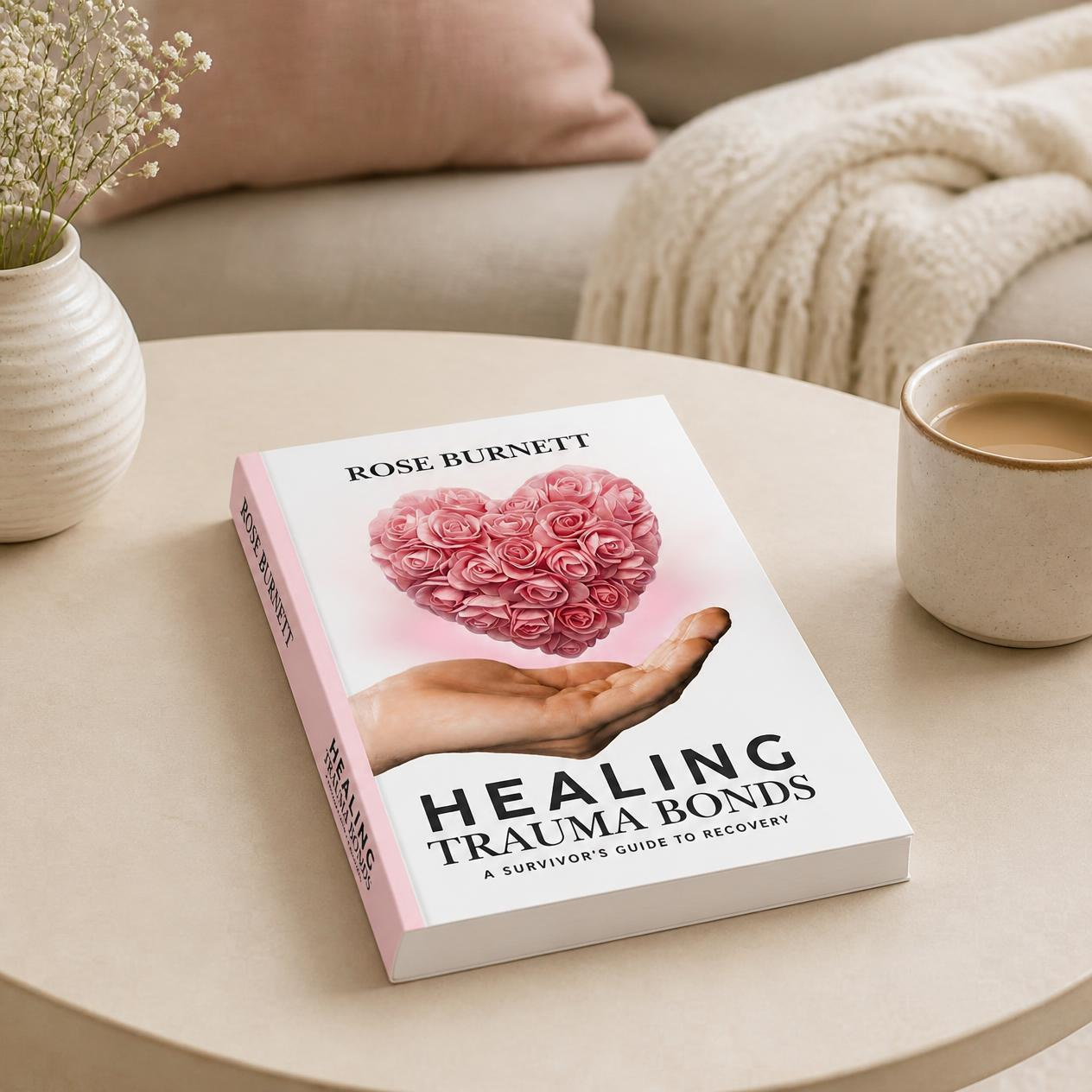
Healing Trauma Bonds: A Survivors Guide to Recovery
Based on a true story, this powerful book explores growing up in a dysfunctional family system and the lasting impact of childhood trauma. It reveals how early pain can shape our identity, self-worth, and the patterns that keep us trapped in trauma bonds. Honest and deeply personal, it speaks to anyone seeking understanding, healing, and freedom.
Available on Amazon in All Countries and Currencies. Choose your local Amazon platform for the best pricing on shipping and postage. Search using ASIN Number: B0HNR4H6XK

ABOUT THE AUTHOR
Rose Burnett is a Certified Transformational Coach, NLP practitioner, Advanced Reiki Practitioner, Psychic Medium and Author with more than 14 years’ experience in mindset coaching. Through her work in inner-child healing, family systems, trauma recovery, mind-body-soul balance, lifestyle coaching and psychic development, she helps people move towards greater awareness, self-discovery and inner growth. Her mission is to support others as they heal, reconnect with themselves and create more balanced, authentic lives.